
In this short video, learn how utility rates are established.
Learn about Water, Wastewater, Storm and Surface Water, and Solid Waste services in Bellevue.
What do utility rates pay for?
Safe, reliable drinking water
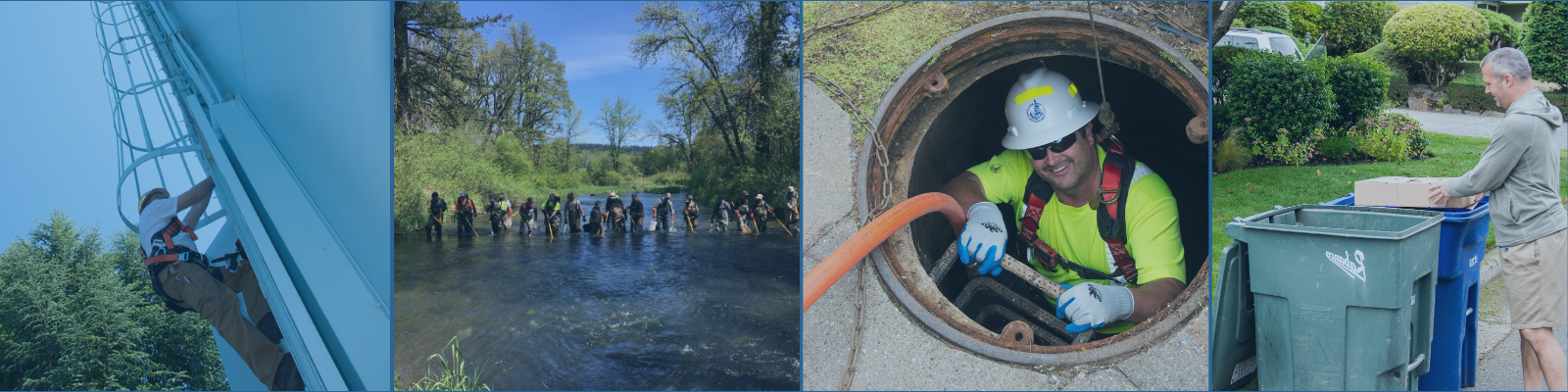
Bellevue maintains more than 600 miles of water mains, 24 reservoirs and other infrastructure that deliver drinking water to homes and businesses. Rates help pay for water supply, system operations, maintenance, monitoring, emergency response and replacing aging infrastructure.
Wastewater collection and transfer
Rates support more than 600 miles of sewer pipes and the systems that safely collect and transport wastewater. They also help pay for wastewater treatment provided through King County. Regular maintenance and infrastructure renewal help prevent sewer backups and overflows.
Flood protection and clean waterways
Storm and surface water rates support systems that manage rainwater, reduce flooding and protect streams, wetlands and lakes. This includes maintaining stormwater infrastructure and taking steps to reduce pollution entering local waterways. Bellevue protects more than 90 miles of open streams and more than 860 acres of protected wetlands.
Maintaining and replacing aging infrastructure
Utility infrastructure requires ongoing maintenance and investment. Rates help fund proactive replacement and renewal of aging water, sewer and stormwater systems so they continue to work reliably and safely for the community.
Planning for Bellevue's future
Bellevue is growing and changing. Utility rates help fund long-term planning, system improvements and capital investments needed to maintain reliable service as community needs change.
Utilities' Rates Overview
Utility rates are approved by City Council as part of the City’s budget. Before the proposed budget reaches City Council, it is thoroughly reviewed by the Environmental Services Commission, a seven-member citizen advisory commission. A public hearing is also held to review public comments before the Commission provides a recommendation and the City Council decides on approval.
2027-28 Proposed Budget and Rates
The proposed budget and rates have not yet been approved by City Council. City Council will review the proposed budget and rates as part of the 2027–28 budget process, to be considered in November 2026.
The proposal includes:
- Wholesale costs from King County Wastewater Treatment Division and Cascade Water Alliance, our water supplier.
- Investments in aging and critical infrastructure to maintain reliable water, sewer and stormwater systems.
- Expanding Utility Bill Assistance to support more community members facing affordability challenges.
The numbers in the table below represent the overall rate revenue increases required to support each utility. Included is a sewer equity rate adjustment to ensure each customer type (single-family, multi-family, and non-residential) is paying their fair share based on their use of the sewer system. Due to this adjustment, single-family and non-residential customer bill impacts will be slightly higher than the combined rate increases listed here, while the rate increases for multi-family residential customers will be slightly lower than these figures.

Why do rates change?
Utility rates are reviewed regularly to make sure Bellevue can continue providing essential services while maintaining the financial resources needed to operate, maintain and renew utility systems.
Rate changes can reflect several factors, including:
- The cost of water supply and wastewater treatment provided by regional partners.
- The cost of operating and maintaining utility systems.
- Investments needed to repair and replace aging infrastructure.
- Long-term capital projects and system improvements.
- Financial policies that help maintain the reserves needed for reliable service and unexpected needs.
- Changes in customer use and the cost of providing service.
Community Engagement
As part of the budget development and rate-setting process, we actively engage with the community to gather input, understand priorities, and ensure our plans reflect the needs and values of the community we serve. Community feedback helps to inform decisions and guide a balanced, transparent approach.
Watch this Community Meeting for an overview of Bellevue Utilities' proposed 2027-28 budget and rates.
Below is a list of opportunities to learn about Utilities' proposed 2027-28 budget and rates and provide feedback. These dates are tentative and may change.
-
Community Engagement
- April 2, 2026
- Environmental Services Commission (ESC) Meeting
- May 6, 2026
- Community Connect Open House
Mini City Hall at Crossroads Mall - May 7, 2026
- Environmental Services Commission Meeting
- May 15, 2026
- Community Connect Open House
North Bellevue Community Center (4-6 p.m.) - May 20, 2026
- Community Connect Open House
South Bellevue Community Center (11 a.m. - 2 p.m.) - May 27, 2026
- Community Connect Open House
Bellevue City Hall (11:30 a.m. 1:30 p.m.) - June 4, 2026
- Environmental Services Commission Meeting
- June 11, 2026
- Virtual Community Meeting (6-7 p.m.)
- June 18, 2026
- Environmental Services Commission Meeting
- June 23, 2026
- City Council Meeting
- July 2, 2026
- Environmental Services Commission Meeting
- Sept. 3, 2026
- Public Hearing - Environmental Services Commission Meeting
Time: 6:30 p.m.
Location: Bellevue City Hall, Room 1E-113
How to participate: In Person or via Zoom (link will be posted one week prior to meeting) - Sept. 17, 2026
- Environmental Services Commission Meeting
- Oct. 1, 2026
- Environmental Services Commission Meeting
- Oct. 13
- City Council Meeting
Water Service Charges
Service charges are based on the size of your meter and the amount of water you use. Water use is billed in units of 100 cubic feet (1ccf). 100 cubic feet of water equals 748 gallons.
Sewer Service Charges
Service charges for single-family homes include a wastewater treatment charge from King County Metro and volume charges based on the meter readings obtained between December 15 and June 15. Multifamily has a per-unit rate with additional charges based on water use over the minimum amount. Wastewater charges for businesses are based on a charge from King County Metro and a volume charge determined by your water use.
Storm and Surface Water Service Charges
Flood prevention/care of streams and lakes service charges are based on the square footage of your property and the percentage of impervious surfaces (roofs, driveways, decks, etc.)